
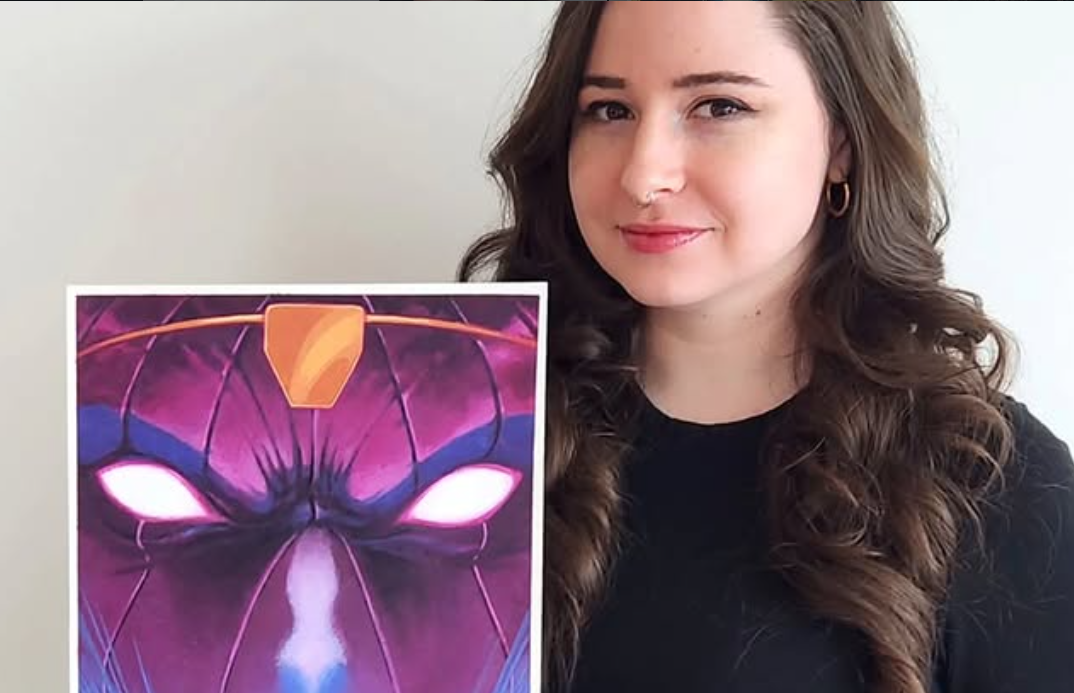
Magic Untapped speaks with Albertan artist Serena Malyon.
For several years, Canadian artist Serena Malyon has seen her works grace projects in everything from Disney to Blizzard to the cover of books. Fittingly, this has also included several dozen Magic: The Gathering cards as well. Magic Untapped interviewed her about recent works in The Hobbit expansion, as well as her influences and other works. Oh, and Smaug. Lots of Smaug.
Magic Untapped: What inspirations and influences in your life drove you to becoming a professional artist? Many fans swear many of your works resemble 1930s-era murals or the work of Diego Rivera - are they close there?
Serena Malyon: I grew up around art, my grandparents were painters, so drawing and painting was nurtured at a young age. I was always mesmerized by the illustrations in my fairy tale books, and I used to stare at some of my book covers (by Leo and Diane Dillon specifically) for ages trying to figure out how they were made. I've had so many influences through my art journey, from folks on DeviantArt, to the old masters, to illustrators from the Golden Age of Illustration, to my international contemporaries whose work I've found on social media. I'm very honored at the comparison to Diego Rivera's paintings, but I wouldn't say that he's a direct influence. The flattening of space, the bright colors, the abstraction are all things that I'm drawn to, and things that I've found come naturally to me.
MU: When working on more natural/nature-based art pieces, what do you draw inspiration from them?
SM: For my paintings about/featuring the natural world, I'm inspired by the feeling of being in nature more than a faithful depiction of it. I enjoy pushing the shapes of hills, clouds, trees into something that evokes movement and life.
MU: How long do you typically spend on a piece?
SM: Most of my work for Magic takes between 40-60 hours to complete, but I can spend much longer on personal work. When I don't have a hard deadline, it's very tempting for me to take ages on a particular painting, making sure every detail is something I'm happy with. On my most elaborate pieces, I've spent around 200 hours working on the final painting.
MU: You’ve done the artwork on many Magic cards dating back many years. Which of your cards have been your favorites and what is it about them that makes them stand out?
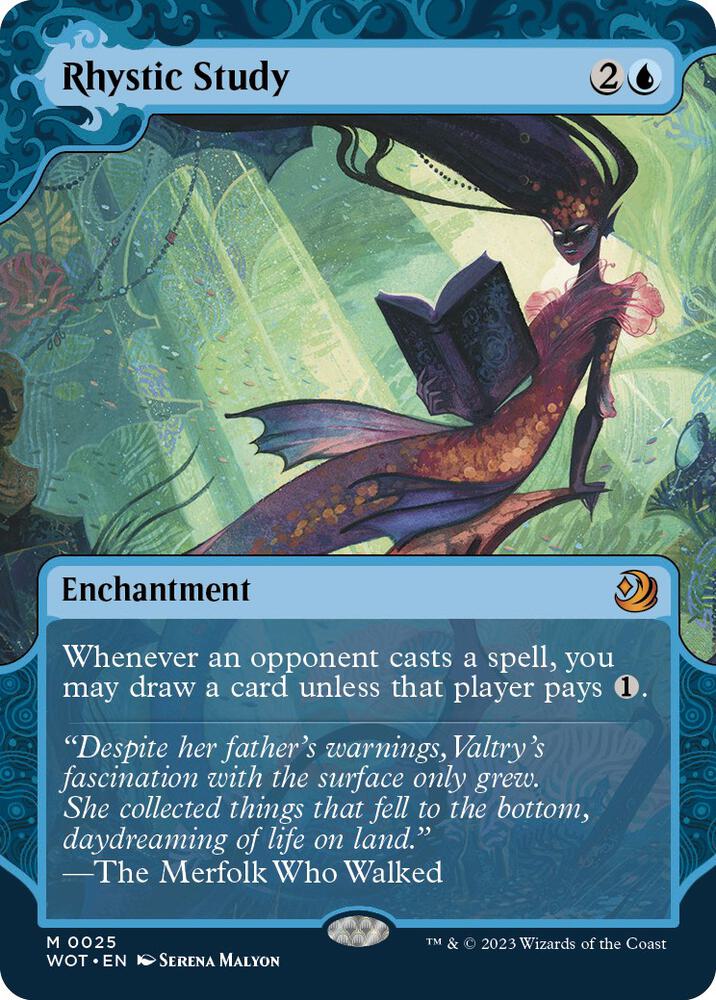
SM: My favorites are Rhystic Study (for Wilds of Eldraine) and Beyond the Quiet (for Edge of Eternities). These were paintings that I took a lot of time to make as polished as possible, and as a result I put a lot of myself into them. They were particularly demanding compositions, one being very detailed and the other being very abstract, and I'm very proud of how they turned out.
MU: Do you have a favorite art piece that was in a card? And , if so, why that one?
SM: I think my all-time favorite is 'Serra Avatar' by Victor Adame Minguez. It's such a masterfully painted piece, but it also has so much movement and scale. The way he's depicted the light cascading down the figure, the atmospheric perspective, the controlled chaos, all so perfect.
MU: Have you ever tried a more "out of the box" approach to a card where you try a new perspective or style?
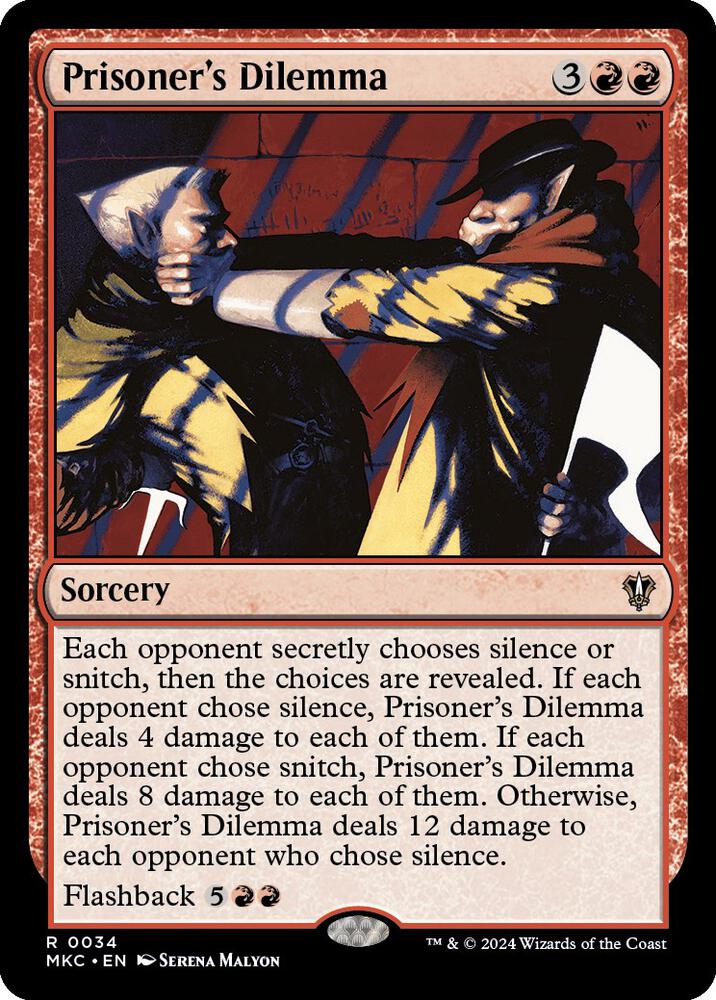
SM: Absolutely - having worked in so many showcase styles, I've really had to push my skill set over the last few years. I think the biggest departure was for Prisoner's Dilemma, even though it was main set. I wanted a kind of noir, pulp novel-cover type stylization, and its grittiness did not come easily to me. I pushed myself quite a bit out of my comfort zone, with everything from the harsh shadows to the color palette.
MU: As a professional artist for several decades, how has your art style evolved over the years?
SM: Early in my career, I was using a lot more abstraction in my work. I was heavily inspired by medieval artworks, their flatness and the way they played with scale. I wanted to go against the grain of what is typically considered "fantasy" art. As it turns out, that's not a great way to get work. So after a lot of portfolio reviews, some experimentation and inspiration, I started pushing my art in a more realistic direction. I could still have a lot of fun with proportions, decorative elements, flat shapes vs areas of intense detail, but it was in a more palatable style.
Through Magic, my art has changed a lot in the last few years. Since I've been working in so many styles for the showcase artworks, I've picked up a lot of new skills and a better feel for the medium I work in. And even though Magic largely has me working in a more realistic style than I used to, I had the chance to revisit some of my old abstraction in Lorwyn Eclipsed. Those Showcase artworks feel very authentic to me, and I'm really glad I got to play in that style again.
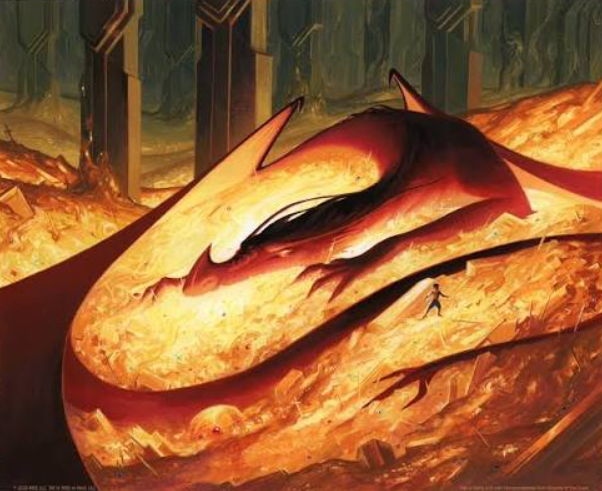
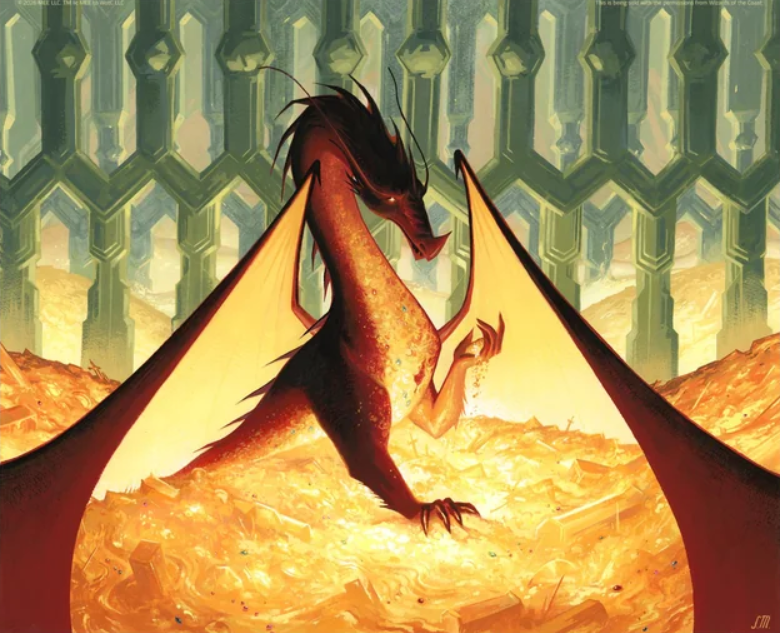
MU: Fans cheered wildly when they saw your recent Smaug art - was there any challenge in portraying such a well known character that also leaves a lot up for interpretation?
SM: Smaug is my favorite dragon in the entire fantasy genre, so I think most of the pressure I felt was self-inflicted. I really wanted to make the best possible art I could of him and show my love of the Hobbit through my painting. The character design for the set was really strong, and I already knew so much of Smaug's personality, so it was a lot of fun to imbue his poses with his attitude. I'm so glad it's had a positive reception.
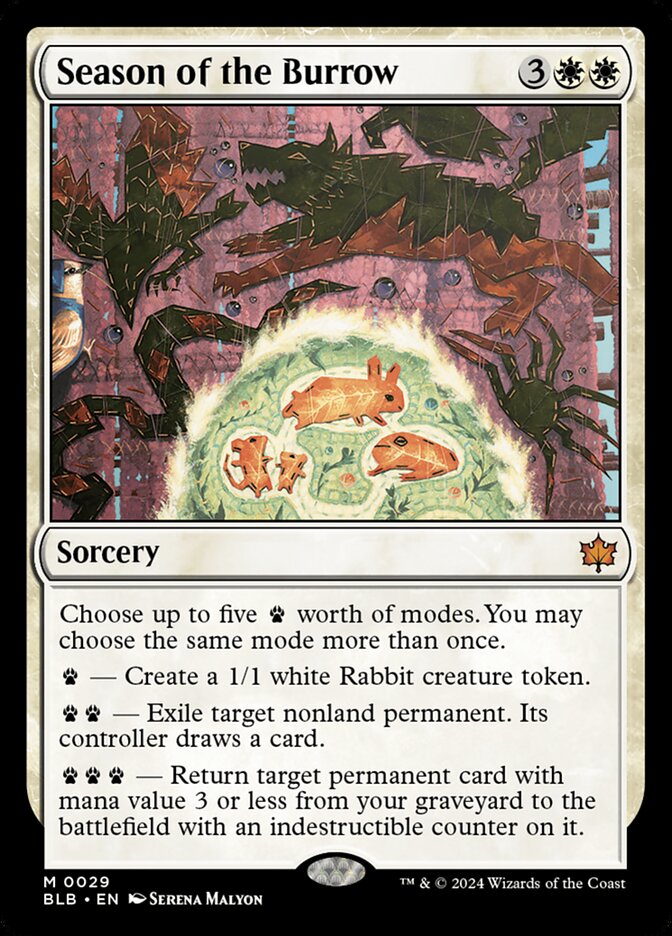
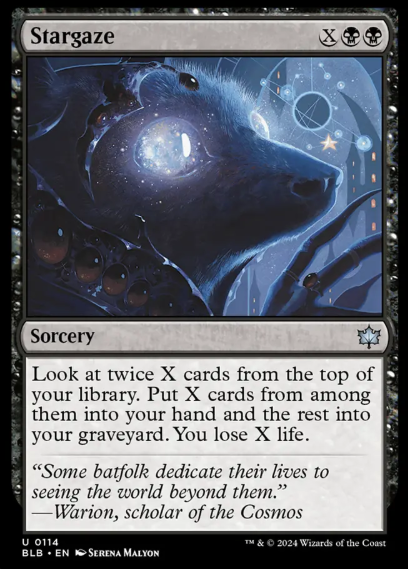
MU: How critical is emotion in your works of art? Some such as Age of Ultron, Season of the Burrow and Stargaze have been called some of the emotional responsive cards in recent years.
SM: Communicating emotion is one of the greatest joys of making art. I strive to create a strong mood or feeling with every piece, I put a lot of myself into each painting (especially personal works). Once it's sent out into the world, people connect to it in so many ways, and I hear lots of different interpretations of my works and the emotions they cause. One of the great joys of making art is the inherent conversation between my intent and the effect it has on others. It's the greatest failure of AI "art", that there's no conversation: no expression, and nothing to interpret.
MU: Do you have a favorite art medium? If so, does it make fantasy artwork harder or easier to create?
SM: Over time I've found that my preferred medium is watercolor and acryla gouache. Watercolor comes naturally to me, I understand color really well using that medium, and it's very liberating to do a rough layer of color using it. It gives me texture and color to work off of. Then I refine everything and problem solve using the acryla gouache. This method allows me to maintain a freshness and whimsy that I would normally lose if I had to be careful and restrained with my watercolor application.
MU: What kinds of things are more tricky for you to create (landscapes, people, creatures, etc.)? Were your many Bloomburrow cards a bit of a challenge because of all the species you needed to illustrate?
SM: I don't normally paint animals, so Bloomburrow was a learning experience for me, but I actually had a much harder time working on the Marvel sagas. Aside from mechanical forms, I don't have a lot of experience painting figures fighting, or heavily-muscled male bodies. So there were some challenges in finding a visual language for this subject matter that felt like my style.
MU: Finally, aside from continuing to play and collect Magic: The Gathering cards, how else can fans of your artwork support what you do? Do you have any future projects coming out soon you are excited about?
SM: I would encourage folks to check out my social media, because I post a lot of personal work on there. People are often confused about my style due to the variety of Showcase cards I've done for Magic, but the best way to figure out my style is to take a look at my personal paintings.
Thank you, Serena, for participating in this interview.
Check out other recent interviews with artists Ben Hill, Lars Grant-West, Christina Kraus, and more!